
Passport is not a proof of citizenship; it is just a document that allows foreign travel. The debate has started after the Indian government re-introduced this fact to the public. Many people are wondering whether documents like passport, Aadhaar card and voter ID, which serve a specific purpose, should also be issued to non-Indians? Renowned lyricist Javed Akhtar has strongly opposed this statement of the Ministry of External Affairs in an X-Ray. Amidst the debate on whether passports serve as proof of citizenship or just as a permit to travel abroad, let us explore what the proof of Indian citizenship was actually during the Mughal era. Was there any system to resolve this issue at that time?
What were the traditional means of identification?
All the proofs of citizenship that we have today did not exist during the Mughal era. Citizenship is a modern term. At that time, people lived under the rule of rulers and the word of the emperor was considered absolute. Identity was defined by religion, caste and profession. Monarchies relied on people who contributed to the tax system of the state and who trusted the administrative system. Family and lineage identity served as traditional identities. Identity was linked to family or kinship ties and land ownership. Ownership of village houses and the signature of local chiefs were the main bases of identity.
Identity was also established through official documents:
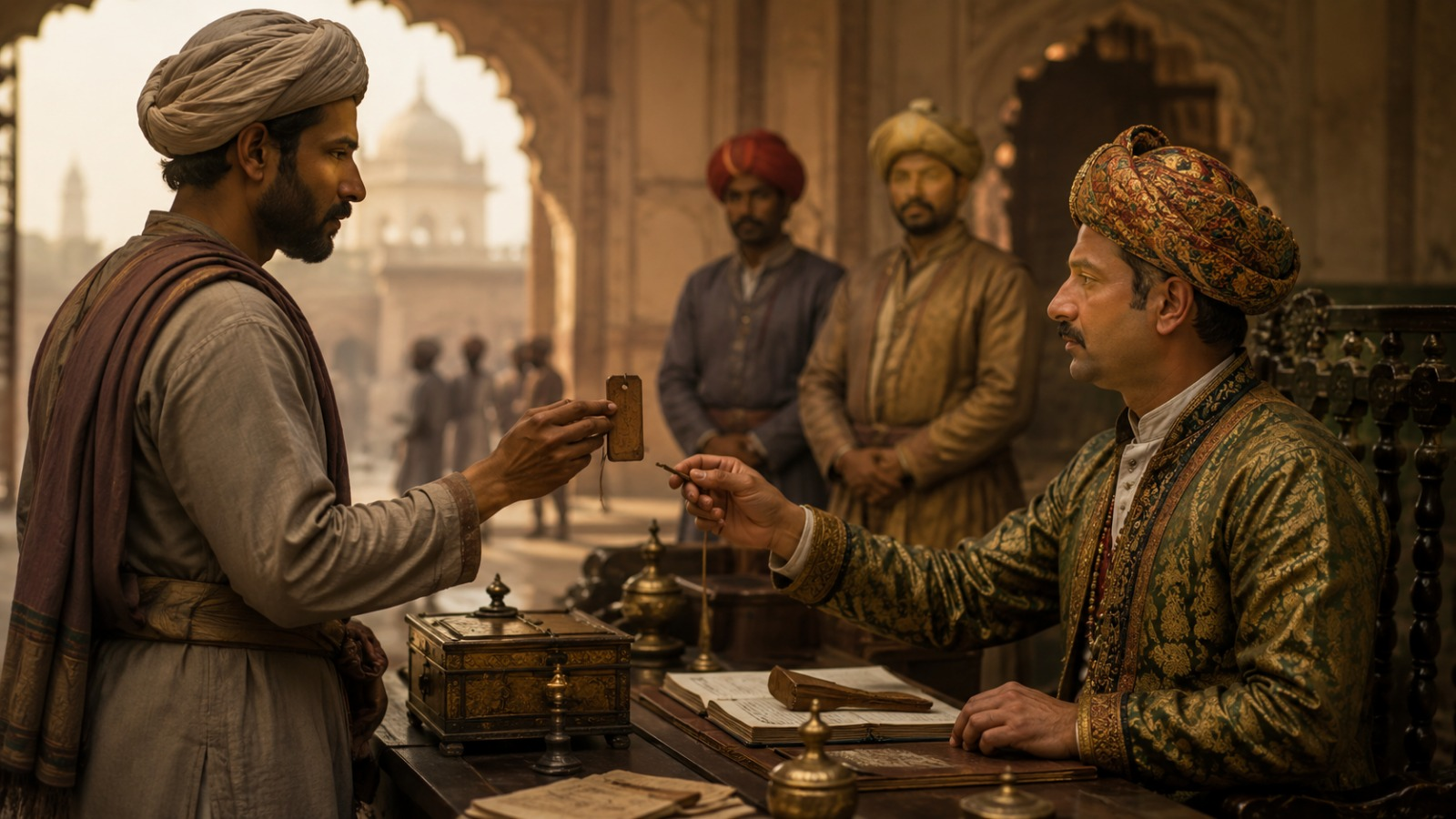
The system of identity cards that we use today did not exist during the Mughal era, and the term “citizenship” was not used. A person’s identity could be easily established through some current documents. These documents were issued by the emperor, the court, or government officials. Some of these are listed below.
Firman: A royal edict or written order of a ruler. Confirmation of laws, tax exemptions, land grants, or special privileges was issued through such royal firmans. These were written in Persian and were authenticated by the royal seal and courtier’s signature.
Sanad: This document authenticated a written record. It served as a specific title or written evidence. Land titles, jagir documents and confirmation of transactions were validated through this document. It was usually issued by the royal court or the local Amanat-Khana (record office). Often, it was written on paper or engraved on copper plates. In case of dispute, it was used as primary evidence.
Parwana: Parwana was considered an important document in granting permission for travel or trade. It served as a document that granted certain privileges or exemptions. It was used to approve tax exemptions, cross-border travel, freedom of trade and so on. These documents were issued by the royal court or district authorities.
Patta: It was a record of land and revenue, which served as evidence of ownership or right to use land. It was used to determine tax liability and to establish claims on land. These records were maintained by the local Patwari, Amin, or Village Chaupal. It was in the form of a written register or personal document. For the farmers, it served as a lifelong record of their status.
Read more: Shocking News: Didn’t see each other for 20 thousand, daughter gets 20 crore income tax notice, father worried about daily wage labor
Copper Plates: During the Mughal era, the emperor often issued orders through copper plates. These were used to record the details of gifts given to temples or prominent families. These plates were preserved for a long time.
Nikah-nama and religious records: These documents authenticated the records of marriages, waqfs or religious donations. They were prepared by a Qazi or a religious official and served as proof of family rights and religious property.
Genealogies and Shazra-i-Nasab: Genealogies were recorded, especially of noble families. This helped to establish lineage and social status.
Seals, tablets and visible symbols: The royal seal served as the ultimate mark of authenticity; many orders derived their legitimacy from it. Within the bureaucracy, even lower-ranking officials retained their own seals. Individuals often had their own personal signatures or symbols, and merchants also maintained their own seals or symbols.
Manasab and court appointment letters: These documents served as proof of appointment to government or military positions. They were usually issued by the emperor and were used to determine rank, military rank and salary.
Read another important news: Venezuela Earthquake: Natural disaster in Venezuela: People search for relatives underground; India extends a helping hand
How were disputes resolved?
The role of witnesses was important in any kind of dispute. Documents were authenticated by seals and witnesses. Even at that time