

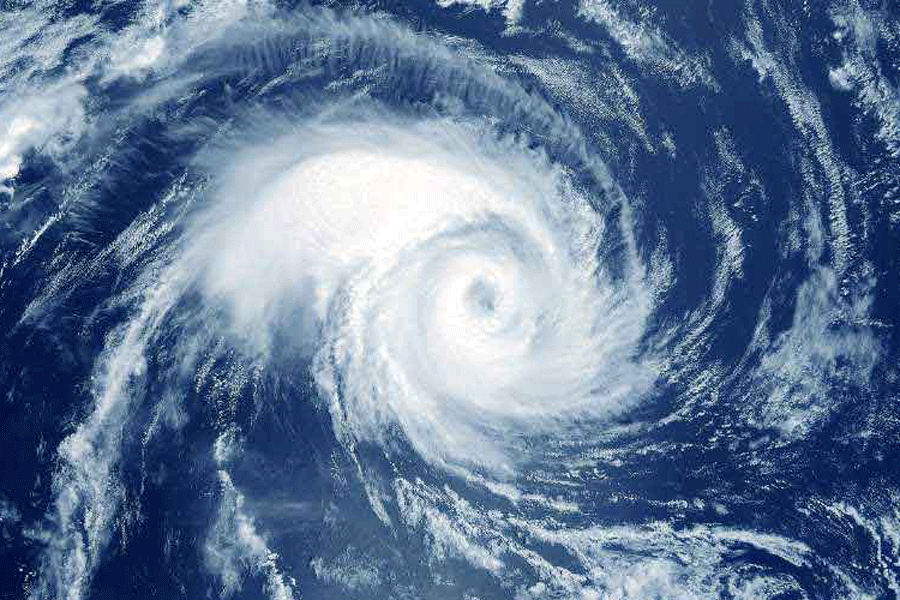
The rainy season has ended, yet the threat of rain persists. Heavy rainfall occurred under the influence of three consecutive cyclones. Following ‘Arnab’ and ‘Murasu’, ‘Akbhan’ brought the crisis of rain and floods. Farmers’ crops have been devastated, yet the rain shows no signs of abating. The threat of low-pressure systems continues; another such system is now likely to form. By the 30th of this month, a low-pressure area may develop near the southeastern Bay of Bengal and the Andaman Sea. With three consecutive cyclones having headed toward the Andhra-Odisha coast, the prospect of yet another low-pressure system has heightened concerns. The India Meteorological Department (IMD), in its extended-range forecast, has also indicated the potential formation of a cyclonic circulation. However, the IMD has not yet made any forecasts regarding its intensity, path, or impact.
According to some models, the potential low-pressure area might move towards Sri Lanka. Another model suggests it could intensify. However, it is not easy to make a clear assessment at this stage. Dr. Mrutyunjay Mohapatra, Director General of the India Meteorological Department (IMD), noted that cyclones typically occur during two specific periods of the year. Meanwhile, the state capital experienced dense fog today; a thick blanket of fog was observed in areas including Bhubaneswar and Cuttack. The dense fog has led to poor visibility and disrupted transportation. It is also projected that the cold will intensify in three days. Cyclones occur in the Arabian Sea and the Bay of Bengal during the periods of April to June (pre-monsoon) and October to December (post-monsoon). On average, there are about 5 to 6 cyclones per year—typically 1 to 2 between April and June, and 3 to 4 between October and December. However, this does not mean that exactly this number of cyclones will occur every year. This year, there were no pre-monsoon cyclones.
Recently, three consecutive cyclones (Ornab, Murasu, and Akbhan) have emerged in the Bay of Bengal, one after another. All three of these cyclones headed towards the Andhra-Odisha coast. A similar situation occurred in 1987. Notably, there is a strong El Niño event this year; a strong El Niño condition was also present in 1987. The IMD has stated that the weather across the state is likely to remain mainly dry until the 1st of the coming month. Night temperatures will not change significantly over the next three days. Thereafter, night temperatures may drop by 2 to 3 degrees over the following four days.