
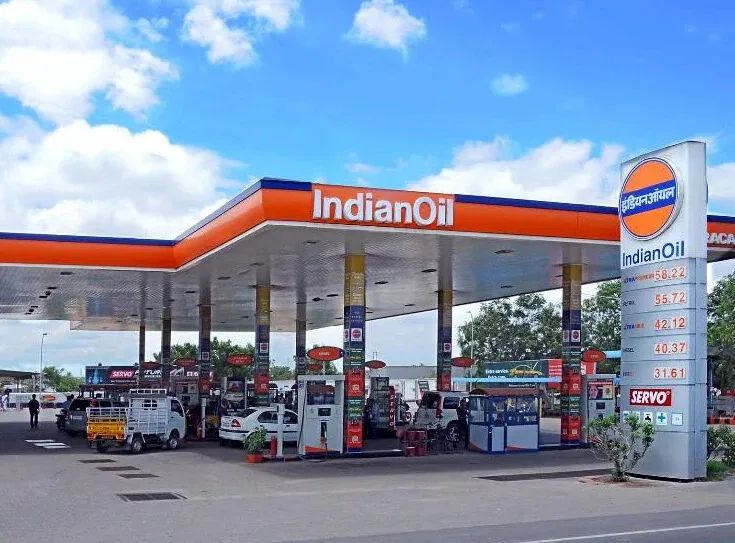
Petrol and diesel prices have been hiked for the third time across the country today (Saturday). With this increase, the total cost of these essential fuels has increased by up to Rs 5 per litre. Meanwhile, the central government has claimed that petrol and diesel prices are higher in opposition-ruled states. In fact, the prices of petrol and diesel vary across states as state governments impose different rates of VAT and additional local cess.
The excise duty levied by the central government remains the same across the country. However, the final price that consumers pay at petrol pumps depends on the tax policy of the state government. Quoting a central government notification, it mentioned that the effective tax rate of states with the highest VAT is 30% or more. In addition, additional duty and infrastructure cess are also levied on every litre. Meanwhile, the states with the lowest VAT rates have a tax rate of around 20% and no additional cess.
Petrol price differential by state…
After the latest hike, Andhra Pradesh recorded the highest petrol price of Rs 117.8 per litre. Andhra Pradesh Chief Minister Chandrababu Naidu’s Telugu Desam Party (TDP) is an ally of the BJP at the Centre. The state levies 31% VAT, plus an additional tax of Rs 4 per litre and a road development cess, taking the total tax burden to around 35%.
After Andhra Pradesh, petrol is the most expensive in Telangana and Kerala, where it costs Rs 115.7 and Rs 112.3 per litre respectively. Both states are ruled by the Congress. Meanwhile, petrol prices in Madhya Pradesh, West Bengal, Bihar and Rajasthan range from Rs 111.4 to Rs 108 per litre. Many of these states are ruled by the BJP.
On the other hand, petrol prices are the lowest in BJP-ruled Haryana, Delhi, Uttar Pradesh and Gujarat, ranging from Rs 99.7 to Rs 99.1 per litre. Meanwhile, in Aam Aadmi Party-ruled Punjab, petrol prices are at Rs 101.1 per litre.
In view of the US-Iran war and the growing crisis in the Strait of Hormuz, the Modi government has reduced excise duty to reduce the burden on the domestic economy. However, VAT collected by state governments is calculated as a percentage of the original price and operational costs. Therefore, the final price received by the public is still determined by the tax policy of the state government. The central government had reduced excise duty on petrol and diesel by Rs 10 per litre on March 27, 2026. Subsequently, central excise duty on petrol was reduced to Rs 3 per litre, while central excise duty on diesel was reduced to zero.