
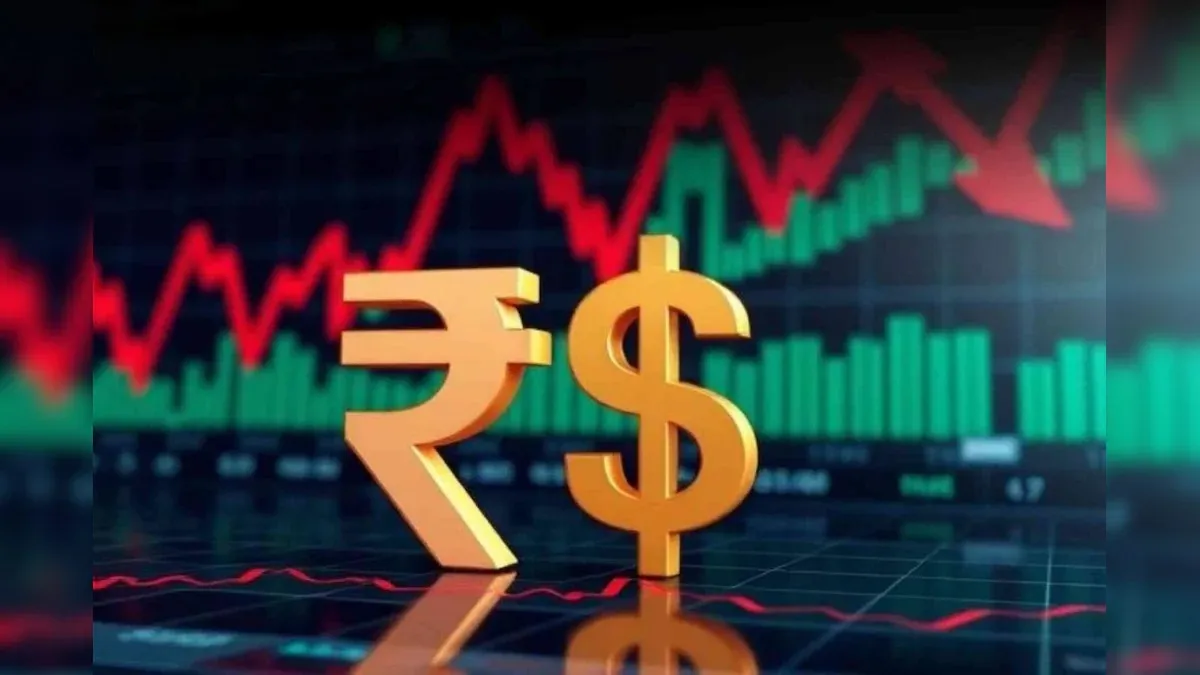
The value of the Indian currency (Rupee) has depreciated significantly against the US dollar, edging closer to the 100-mark. This decline is driven by several factors, including the strengthening dollar, rising crude oil prices, capital outflows by foreign investors from Indian markets, and an increase in US Treasury yields. Last Friday, the rupee had strengthened by 17 paise against the US currency to close at 96.71 per dollar; however, observing current trends, economic experts fear it could slide towards the 100-mark in the near future. In this context, RBI Governor Sanjay Malhotra has stated that financial markets often do not behave rationally in the short term. Various indicators suggest that the Indian rupee is not ‘overvalued’ but may actually be ‘undervalued’. Parameters used for currency valuation—specifically the ‘Real Effective Exchange Rate’—indicate that the Indian currency is not weak.
IMF’s View:
Meanwhile, the International Monetary Fund (IMF) has stated that the Indian rupee is sufficiently capable of withstanding the aforementioned pressures. The IMF has opined that the US Federal Reserve’s decision to raise interest rates will further tighten global financial conditions, while India’s exchange rate will serve as a ‘shock absorber.’ It is also suggested that the RBI could sell dollars if excessive market volatility or panic arises. Crude oil prices are a major factor exerting pressure on the rupee; India imports approximately 90 percent of its crude oil. Rising oil prices disrupt the country’s trade balance and increase the demand for dollars. A $1 increase in the price of crude oil raises India’s annual import bill by approximately ₹18,000 crore.
Is a weakening rupee beneficial or detrimental? According to economists, India is not a purely export-oriented economy that would immediately benefit from a currency depreciation. However, a weaker rupee does help Indian exporters offer more competitive prices in foreign markets. Yet, given the reliance on imports for most raw materials and oil, a weak rupee drives up import-induced inflation within the country. Experts suggest that if the rupee settles around the 98 or 100 mark, it could be viewed as a financial adjustment rather than necessarily a major crisis.