
China dominates the global shipping container market, holding a 90% to 97% share. In contrast, India imports 2 million empty containers annually. India has now decided to end this dependence on China within its supply chain.
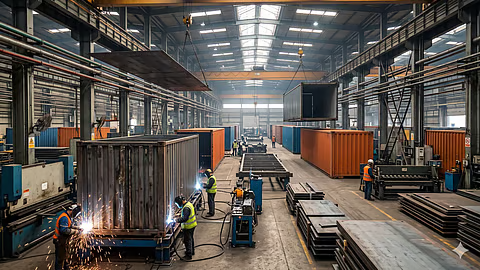
A significant decision in this regard was taken during a Union Cabinet meeting held on Wednesday, chaired by Prime Minister Narendra Modi. As part of this, the ‘Container Manufacturing Assistance Scheme’ (CMAS) has been approved for a period of 13 years, extending up to 2039-40. An expenditure of ₹10,000 crore will be incurred for this initiative. The scheme will promote the establishment of new manufacturing units, testing infrastructure, and skill development within the country. Broadly speaking, the objective is to establish a world-class container manufacturing ecosystem in the country.
India’s exports are growing rapidly. Approximately 2 million empty containers are required annually, which are currently imported to meet domestic demand. This makes India vulnerable in this regard. There are three main reasons for this: volatility in the global market regarding container availability, significant fluctuations in freight rates, and the resulting disruptions to the supply chain. The objective of the container manufacturing scheme is to strengthen the domestic supply chain. Participating units are required to use at least 70% local content by the financial year 2031-32. This requirement will increase to 90% from the financial year 2032-33.
According to the government, this scheme has the potential to generate over 50,000 indirect jobs. It is expected to create approximately 3,000 direct jobs and more than 50,000 indirect jobs within the container manufacturing sector and its associated industries. The scheme includes four components designed to support domestic production: interest subsidy, assistance for testing and certification, support for land leasing, and assistance for operational expenses. The ‘Khelo India’ Sports Goods Manufacturing Scheme was approved during Wednesday’s Cabinet meeting, with an expenditure of Rs 1,856 crore. Similarly, an allocation of Rs 7,395 crore has been made for the ‘Pradhan Mantri Vikashit Gram Swaraj Yojana’.