

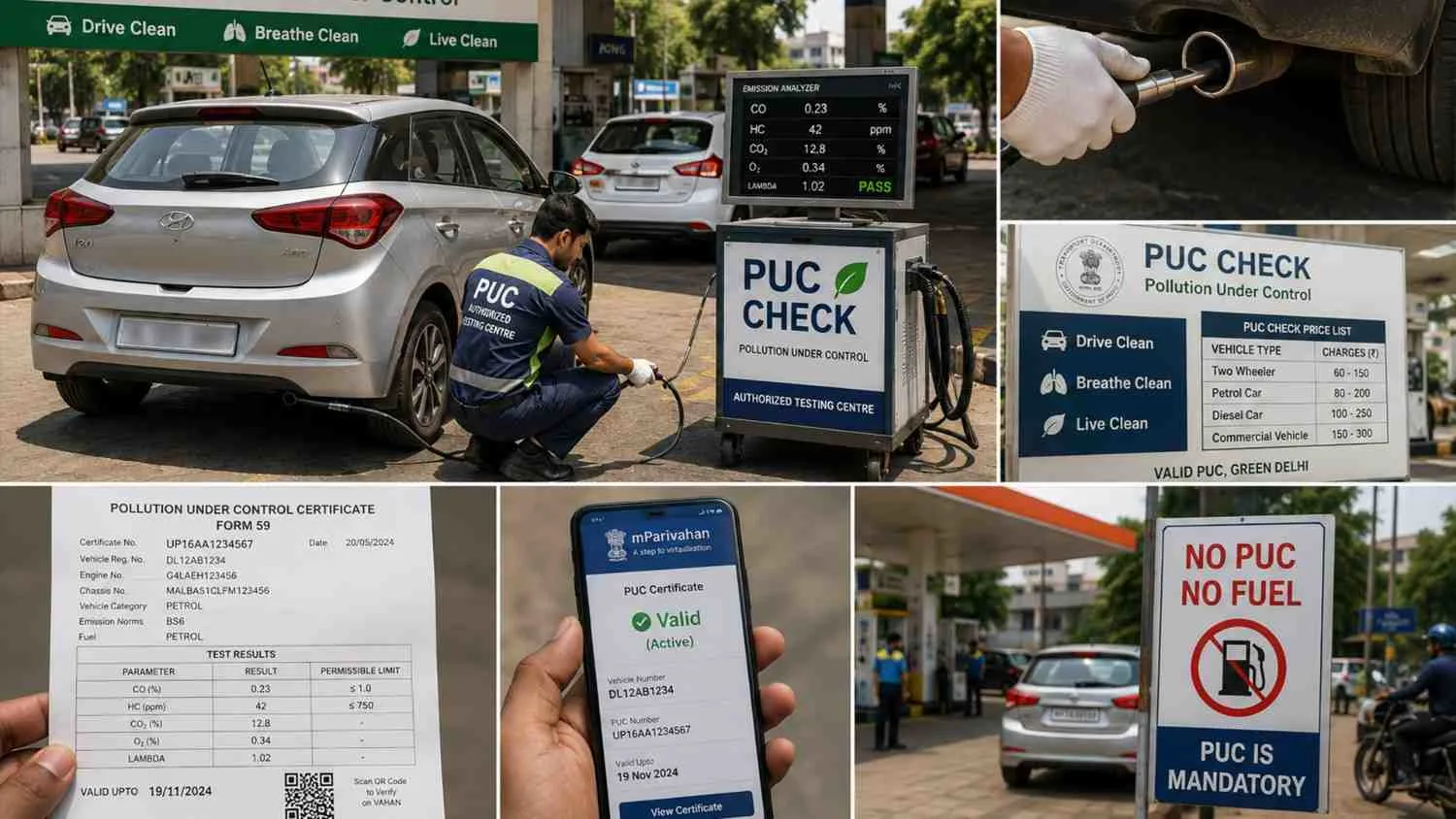
The government is set to introduce major changes to the system for issuing Pollution Under Control (PUC) certificates for petrol and diesel vehicles in the country. The objective is to make the process more transparent and secure. It is proposed that technology be integrated into pollution-testing equipment to ensure that no tampering with the test reports is possible.
Under this new system, a special security chip will be installed in the pollution-testing machines. Furthermore, the test reports generated by these machines will include a digital signature. The test results will be transmitted directly to a central server. This will minimize the risk of testing centers manipulating reports or altering the recorded figures at their own discretion. This proposal for change comes at a time when the focus is on controlling vehicular emissions and enhancing the reliability of the PUC (Pollution Under Control) testing system.
According to a proposed amendment to the Automotive Industry Standard (AIS-137 Part-8)—issued last October—there is a provision to install a specialized security chip called TPM (Trusted Platform Module) 2.0 in machines used for pollution testing of petrol and diesel vehicles. The function of this chip is to secure the test reports or results generated by the machine and prevent any unauthorized alterations. To achieve this, cryptographic keys will be utilized within the machines. The results or reports generated by the machine during vehicle pollution testing will be digitally authenticated. This ensures that the reports or results cannot be tampered with via the computers or other external devices present at the testing center. Under the proposed system, the pollution testing machine will be connected to a central PUC (Pollution Under Control) server using its own SIM or e-SIM connection. Currently, reports are generated during testing with the help of the machine and an associated computer.
In the new system, the machine itself will digitally sign the test results and then transmit them directly to the government server. Consequently, the computer at the local inspection center will only be involved in initiating the inspection and printing the certificate. It will not be possible to access the machine’s internal digital security system from this computer, nor will it be possible to tamper with the actual inspection report. Most importantly, there is no need for an internet or Wi-Fi connection on the local computer to transmit the inspection report; the data will be sent via the machine’s own SIM or e-SIM network.