
The prices of animal products like milk, eggs and meat are not showing any signs of coming down in the country. There were many reasons behind this, but the biggest reason is the increase in the price of animal and poultry feed. The increase in the prices of major feed ingredients like corn and soybean meal has a direct impact on the production costs of milk, eggs and meat. In the financial year 2013-14, the income from the animal husbandry sector of the country was about 34 percent of the income from crops. By 2023-24, it has increased to 57 percent. That is, the income from milk, eggs, meat and other animal products is now approaching the income from crops.
Feed is expensive, so the production costs are high:
Animal feed like chicken, cow, buffalo, sheep, goat and pig requires the most carbohydrates. Its main source is corn. The feed of broiler chickens raised for meat contains about 55-65 percent corn by weight. Maize makes up 50-60 percent of the feed for laying hens and about 15-20 percent of the feed for cattle and buffaloes. Not only carbohydrates, animals and birds also need protein, calcium, phosphorus, vitamins, fiber and fat. For protein, soybean, mustard, almond, sunflower, and rice bran oil are used as feed.
Prices of maize and soybean seeds skyrocket:
The average price of maize in the Alangam mandi of Erode district of Tamil Nadu was Rs 2,537 per quintal in August 2025. It has increased to Rs 2,759 in August 2026. Especially after March 2026, there has been a sharp increase in the price of maize. According to the National Commodity and Derivatives Exchange, the price of soybean meal, which has 50 percent protein, in Indore, Madhya Pradesh was Rs 38,186 per tonne in August 2025. It had increased to Rs 58,156 in August 2026. Its price is now slightly lower at Rs 48,750-49,000, but still much higher than the average price of Rs 35,327 in September last year. The prices of other protein sources have also increased. According to the Solvent Extractors Association of India, the prices of almond meal and mustard seed are currently Rs 38,000 and Rs 32,600 per tonne, respectively. Their average prices in September 2025 were Rs 24,188 and Rs 24,479, respectively.
‘Ping-pong’ situation regarding price hike:
CLFMA President Divya Kumar Gulati said that soybean meal prices have come down slightly from their peak of Rs 63-64 thousand. But as soon as its price decreased, the price of maize has started increasing. As a result, the fodder price situation has become like a ‘ping-pong game’.
Egg prices also hit a record high:
According to the National Ag Coordination Committee, the wholesale price of eggs in Delhi is around Rs 600 per 100. In the retail market, one egg is being sold for Rs 7 to Rs 9. Usually, after Diwali, during the beginning of winter and spring, the demand and price of eggs increases. During the hot and monsoon season, the price decreases slightly. From Shravan, Patapapa, Navratri to Diwali and Chhath Puja, many families do not eat eggs, which reduces the demand. But in July this year, the NECC’s recommended egg price reached Rs 725-730 per 100. The average price in July was Rs 670.5, which is 38.7 percent higher than last year.
Impact of heat and delayed rains:
According to NECC’s Chief Operating Officer Sanjeev Chintawar, this time, many factors came together. The rains were delayed due to intense heat and El Nino. This resulted in water shortages, chickens fell ill and the death toll increased. Along with this, the prices of maize and soybean meal were suddenly increased in July. Although egg prices have come down somewhat due to Shravan, the problem of high feed costs still persists. In the last four months, the feed price for laying hens has increased from Rs 24-26 per kg to Rs 30-32. A farmer spends 65-70 percent of his total egg production costs on feed alone.
Broiler chicken prices also affected:
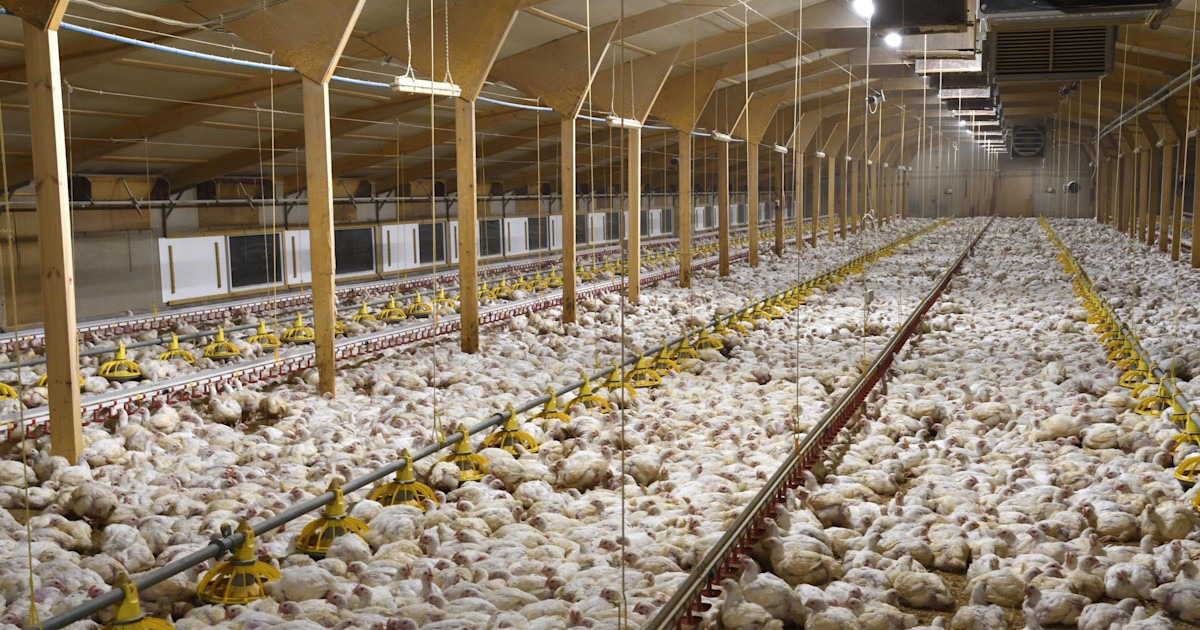
In North India, the wholesale price of broiler chickens crossed Rs 150 per kg live weight in late June and early July. After Shravan, it is now around Rs 120 per kg. According to Vicky Thapar, Joint Secretary of the Poultry Federation of India, in the last four months, the price of broiler feed has increased from Rs 40 to Rs 46 per kg. As a result, the farmers’ profits have come down a lot. Currently, the total cost of chicken production has reached around Rs 110 per kg.
A chicken takes 35-42 days to produce:
Farmers feed a daily chick weighing 35-45 grams for 35-42 days to produce 2-2.5 kg chickens. On the other hand, the cycle of egg-laying chickens is longer. They start laying eggs at 18-20 weeks of age and continue to lay eggs till 70-72 weeks of age. A hen lays about 250-300 eggs per year.
Soybean prices show some relief:
There has been a slight decline in the prices of soybean meal in the last few weeks. Farmers have planted almost the same amount of soybean as last year in the current Kharif season. The condition of the crop to be harvested in October-November is also better than normal so far. There are no reports of any major diseases. Soybean has been less affected by El Niño than other crops that require more water and fertilizer. Besides, some large poultry companies have also signed agreements to import soybean from abroad as they prepare their own feed. In 2025-26