

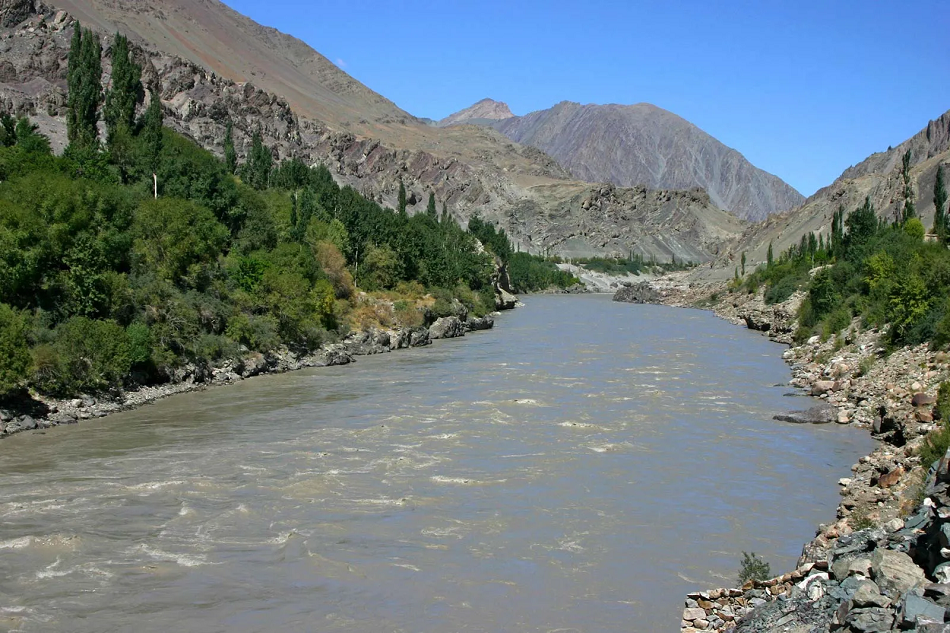
The Himalayan glaciers and rivers fed by melting snow are the lifeblood of 2 billion people. They are some of the world’s most important waterways. They provide drinking water, irrigation and hydroelectric power for vast swaths of South and East Asia. According to a recent study, these rivers are becoming dangerously unstable. The rivers are changing direction at a faster rate than ever before, threatening nearby communities, farmland and infrastructure.
Professor Chengshan Wang and Dr. Zhongpeng Han of the China University of Geosciences in Beijing and Dr. Zhipeng of Sichuan University led the study. They analyzed changes in three major river basins in the Himalayas using satellite imagery and field observations over four decades from 1980 to 2020.
Dramatic events in Himalayan rivers:
Rivers are changing. Channels are changing. Rivers change course. Rivers erode and redevelop. However, a recent study shows that the rate of this natural process has increased dramatically. In the study area, the rate of river displacement increased by 33 percent between 1980 and 2020. Rivers change their course to flow freely without getting trapped in the surrounding terrain. This increase was found to be about 97 percent.
The researchers studied 1,079 river bends surrounding a 1,582-kilometer (982-mile) stretch of ice-covered land. They identified more dramatic changes than the total rate of displacement. These changes include river diversions, in which a river leaves part of its old course and flows along a new, smaller path. Changes also include ‘ablations,’ in which a river suddenly changes course and flows along a completely new path. In some areas, rivers changed from single to multiple courses. All of these events increased significantly during the study period.
Rivers in a changing climate:
The Himalayas have been warming at about twice the global average since the 1980s. This warming is heating rivers in two ways, each of which is proving more powerful than either alone. The first is meltwater. As glaciers shrink, permafrost melts. This causes more water and silt to enter river systems. Rivers are unable to handle more than they can handle. The second is more subtle but more important. The ice sheet that supports river banks is melting more. When this ice sheet softens, the river banks that support it weaken and erode. This makes it easier for rivers to flow in new directions.
The study also points to a factor that makes the Himalayas even more vulnerable: the absence of vegetation. The melting snow on Mount Meru is giving new shape to the rivers. The Himalayan region is severely lacking in vegetation. Once the land beneath the snow melts, there is nothing to hold it in place. This is a direct threat to the world’s most populous region. The unstable rivers bring more frequent and unpredictable floods. They destroy farmland. They deposit sediment that bury fields and block waterways.