

Despite the strict sanctions and constant military pressure from the US and the West, Iran’s navy remains a major power in the Gulf region. Iran maintains its dominance over the Strait of Hormuz, the most sensitive sea route that supplies oil to the entire world. But this country with a population of 90 million has designed its military power in such a way that even the great powers avoid direct confrontation. Iran’s unique naval power and its military structure are astonishing. Let’s find out how strong the Iranian army is despite so many attacks from the US.
Iran’s power is divided into two parts….
The most important feature of Iran’s defense system is its dual military system. The Iranian army is mainly divided into two separate parts, managing the security of the country. The first is the regular army, called the Artesh, and the second is the IRGC, called the Islamic Revolutionary Guard Corps. The IRGC is considered Iran’s most dangerous and trusted special forces. The regular army includes the army, navy, air force, and air defense forces, which traditionally protect the country’s borders.
The total number of army and navy…
In terms of total military strength, Iran has a large army. It has 1 million 60 thousand soldiers. This includes 350,000 soldiers in the regular army, 3700 in the air force, 1500 in the air defense force, and 1800 in the regular navy. On the other hand, the IRGC has 150,000 soldiers in the ground army, 1500 in the aerospace force, 5000 in the Quds Force, and 2000 in its own dangerous navy. In addition, Iran maintains a large reserve force of 450,000 soldiers at all times.
A double security wall on the sea border…
To protect its maritime borders, Iran has divided its navy into two parts. The first is the Islamic Republic of Iran Navy (IRIN), which conducts conventional operations at sea and in the Persian Gulf. The second is the IRGC Navy, which has a highly aggressive active force of around 18,500 to 20,000. This semi-military navy is considered to be adept at coastal defense, missile and speedboat operations, and close surveillance of strategic waterways such as the Strait of Hormuz.
A large fleet of submarines and warships…
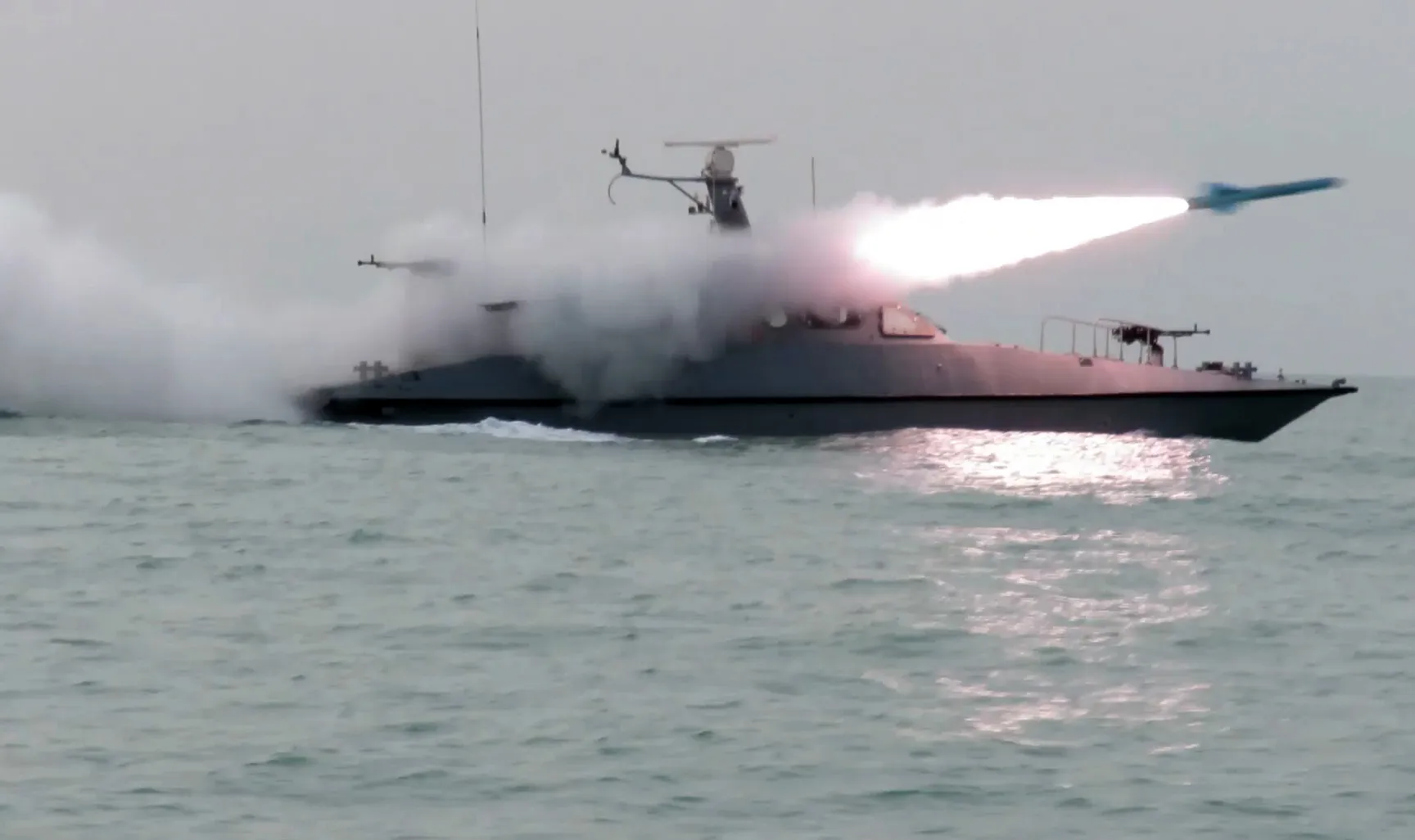
Despite such a significant blockade, Iran still maintains an estimated 90 to 100 small and large warships and a robust submarine fleet. Iran’s submarine force consists of 18 to 21 submarines, mainly Kilo-class submarines purchased from Russia and modern, indigenously built “Ghadir” and “Fateh” submarines. To counter enemy attacks in the Gulf, it has about 100 fast attack speedboats and patrol boats equipped with modern anti-ship missiles.
Countering asymmetric warfare…
To counter a powerful nation like the United States, Iran employs “asymmetric warfare” instead of traditional high-seas warfare. This means it launches simultaneous attacks on enemy ships using hundreds of small, fast, missile-armed speedboats. Thanks to its coastal terrain, its understanding of narrow sea lanes, and its deadly cruise missiles, the Iranian Navy is considered one of the most lethal and effective naval forces in the entire Gulf region.
Recent tensions and an attack on an air base…
Tensions have recently increased between Iran and the US after the IRGC Aerospace Force claimed to have targeted a key air base. Iran claims the base was used for a US attack on a telecom tower on Sirik Island. Although Iran did not disclose the exact location of the base, the claim came after Kuwait reported that it had been attacked by missiles and drones.