

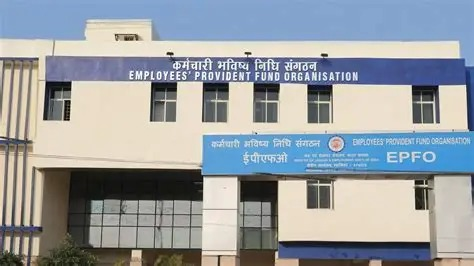
On September 17, the Central Government raised the monthly wage ceiling for the Employees’ Provident Fund Organisation (EPFO) from ₹15,000 to ₹25,000. This move will bring over 10 million people across the country under the social security net. However, concerns were raised that companies might attempt to deduct the required contribution from employees’ salaries or adjust it against their Cost to Company (CTC). Addressing this, the Union Ministry of Labour and Employment has directed employers that there must be no reduction in the employees’ net take-home pay. In accordance with government regulations, employees must continue to receive the same salary they were drawing, excluding the employer’s contribution. According to the ministry, employers cannot deduct social security contributions from an employee’s dues simply by categorizing them as part of the Cost to Company (CTC). Companies should view this additional contribution as an investment in human resources, which would enhance employee satisfaction and productivity. Under the new rules, employees with a monthly basic salary ranging from ₹15,000 to ₹25,000 will be covered under the mandatory EPF and pension schemes. The employee’s own 12% contribution will go entirely into the EPF account. Of the employer’s 12% contribution, 8.33% will be allocated to the Employees’ Pension Scheme (EPS), while the remainder will be deposited into the EPF account. While the monthly contribution was previously ₹1,800 based on a salary limit of ₹15,000, it will now be ₹3,000 under the revised limit of ₹25,000.
The government has clarified that by making higher contributions to the EPF, employees will benefit from long-term income tax exemptions, higher interest earnings, a guaranteed pension, and free insurance coverage. Meanwhile, to alleviate the additional financial burden on employers, the government will provide an incentive of up to ₹3,000 per month for every new hire under the Pradhan Mantri Viksit Bharat Rojgar Yojana. In an advisory, the Ministry of Labour has asked all employers to identify employees earning between ₹15,000 and ₹25,000 and enroll them in the new scheme immediately, without waiting for the next salary cycle.