
Robots were seen running on the sports field and even displaying prowess in boxing. However, the battlefield has now become the next destination for these robots following the ‘World Humanoid Robot Games’ held in China. News has emerged regarding military training being imparted to these robots; does this mean robot soldiers will fight alongside human soldiers in future conflicts?
Robots delivered impressive performances in China, participating in various events ranging from running races to boxing matches. There were even claims that some robots surpassed human records in the 100-meter dash. Yet, beyond their athletic feats, China is now subjecting these robots to trials in a combat environment. Just two days after the games concluded, reports emerged that China’s People’s Liberation Army (PLA) had conducted training exercises for robots in a battlefield-like environment. This indicates that robots are not intended solely for factories, laboratories, or routine tasks; China is now focusing on the battlefield. Specifically, research is underway to determine the feasibility of deploying robotic soldiers alongside human troops, particularly in urban warfare scenarios.
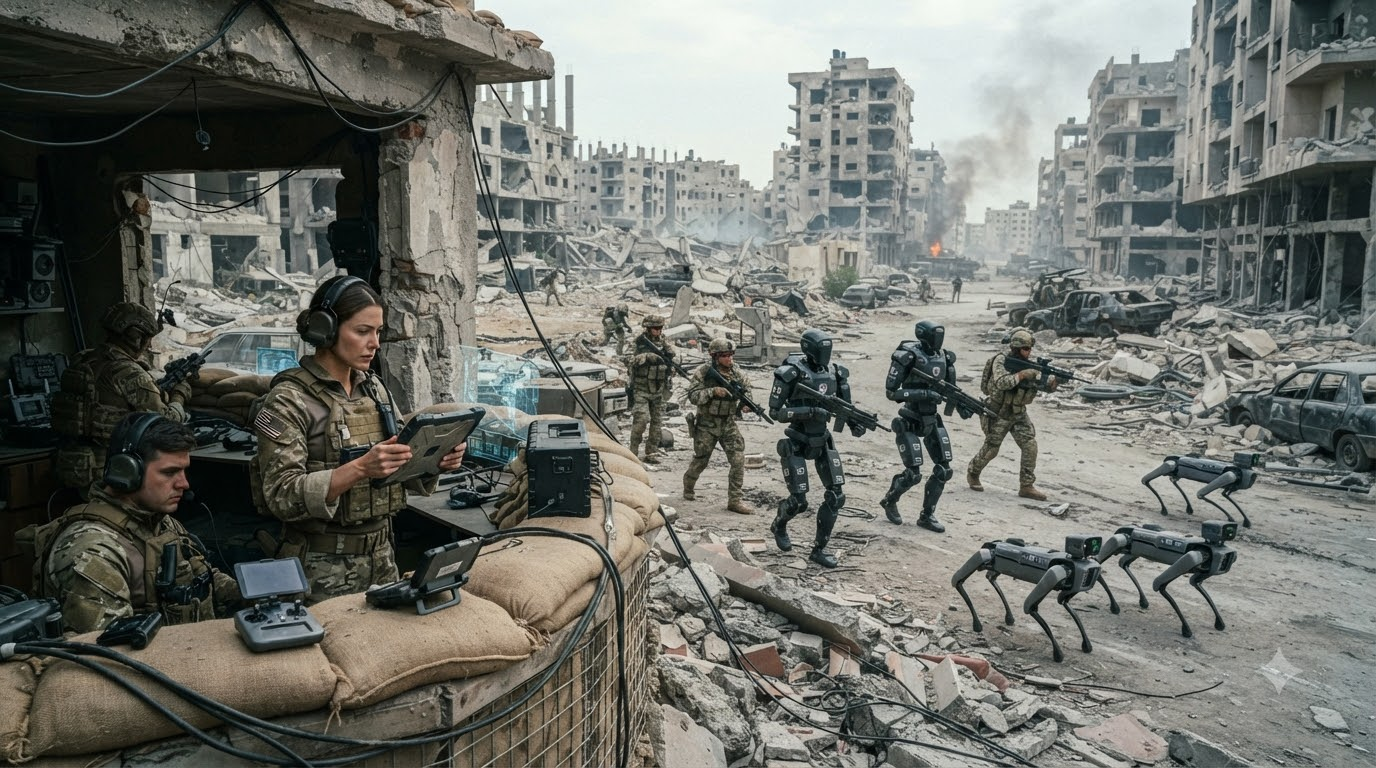
Researchers at China’s National University of Defense Technology conducted studies involving six types of combat robots. These included humanoid robots, robotic dogs, and unmanned ground vehicles. The objective was not merely to test the robots’ mobility or physical capabilities, but to evaluate their operational performance in a combat environment. The research also involved testing tasks such as deploying robots into uncharted territory to map the terrain and identify critical targets.
China is experimenting with a new model for future warfare. The process begins with human soldiers conducting reconnaissance of the area, followed by the deployment of robot soldiers to designated targets. Essentially, the trials aim to determine whether robots can evolve from merely assisting human soldiers to executing missions with greater autonomy.
Artificial Intelligence (AI) will play a pivotal role in this entire process. The PLA is also researching how AI can assist in military operations within complex combat environments. Reports indicate that a budget of $300,000 has been allocated to develop such a system by June 2026. AI will comprehend battlefield conditions by integrating data from sources such as robot cameras, radar, and motion sensors; the ultimate goal is to develop the capability to make decisions based on this information.
The evolution of robotics has reached a new turning point. This experiment by China not only highlights a new frontier in military technology but has also sparked a global discussion regarding the extent to which future warfare will be unmanned and reliant on AI.