
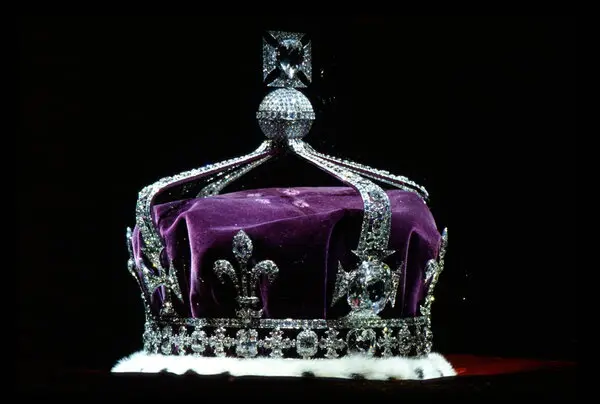
New York City Mayor Zohrab Mamdani has raised the Koh-i-Noor diamond in the spotlight. Mamdani has said that he wants the Koh-i-Noor diamond to be returned to India during the visit of Britain’s King Charles III to the US. In a statement, Mamdani said, “If I were to speak to the King of Britain privately, I would definitely ask him to return the Koh-i-Noor diamond.” The Koh-i-Noor (Koh-i-Noor) is one of the world’s most famous and valuable diamonds, but some consider it a curse, especially for male rulers.
The Koh-i-Noor is famous for being one of the largest cut diamonds in the world. It weighs 105.6 carats. It is part of the British Crown Jewels. Currently, it is owned by King Charles III and Queen Consort Camilla. Over the past few centuries, the diamond has passed through the hands of various rulers around the world.
Origin of Kohinoor…
The Kohinoor originated in South India, was later given to the Mughals, and through Afghanistan and Punjab, it is now owned by the British royal family. Kohinoor means “Mountain of Light” in French, but its name, contrary to its name, is said to be cursed. It is said to bring bad luck to its male owners. Talk of a Kohinoor curse resurfaced after British King Charles III was diagnosed with cancer.
According to the Odisha State Archives, the Kohinoor was discovered in the Kolur mines of the Golconda region (Telangana) during the reign of the Kakatiya dynasty. As one of the largest diamonds in the world, the Kohinoor was considered a symbol of prestige. For this reason, rulers fought each other to possess it as a trophy.
The Peacock Throne brought fame to the Kohinoor…
According to historical documents, in 1628, the Mughal Emperor Shah Jahan ordered the construction of a magnificent “Peacock Throne”. The throne was to be adorned with precious stones such as rubies and emeralds, and the Kohinoor was placed at its center. The Peacock Throne soon became a center of attraction for rulers across Asia.
In 1739, the Iranian ruler Nadir Shah invaded Delhi and took away the Peacock Throne and the Kohinoor. He wore it in an armlet. The Kohinoor remained outside India for the next few decades. However, war after war continued and the Kohinoor passed through the hands of various rulers.
Return of the Kohinoor to India…
The Kohinoor returned to India in 1813 when the Sikh ruler Ranjit Singh captured it after defeating the Afghan Durrani dynasty. But even this time, the Kohinoor did not remain in India for long. After Ranjit Singh’s death in 1849, the British captured his wife, Queen Zindan, and forced their son to hand over the Kohinoor to the British Empire, which still retains it today.
The Kohinoor continued to circulate, but a belief persisted that the king who owned the diamond would lose his power or his life. The East India Company, which had transported the Kohinoor to Britain, also faced the disastrous Mutiny of 1857 a few years later. Perhaps this is why no British monarch has ever worn the diamond.
In Britain, only women have worn the Kohinoor…
Only women in the British royal family have worn the Kohinoor. When the Kohinoor was first brought to England in 1850, it was presented as a gift to Queen Victoria. It was later placed in the crown of Queen Alexandra. According to the Royal Trust collection, the late Queen Elizabeth II was seen wearing the Koh-i-Noor during her coronation in 1953. Following her death in 2022, the current Queen Camilla has owned it.